

In weightlifting, the back squat is the most popular exercise. Many athletes are interested in it because it works the lower body (glutes and hamstrings). However, it is possible to increase your muscle strength with one of its variations: the front squat. WODANDGO explains the benefits of this exercise and how to master it.
Advantages of practicing front squats
The front squat helps you lose weight healthily and develop your muscle strength. It provides a way to expend energy and differs from the back squat in the bar's position. This movement engages the quadriceps and anterior thigh muscles while keeping the torso upright and balanced.
For front squats, you must maintain a constant vertical posture. During your workout, protect your joints with weightlifting accessories (knee pads, wrist wraps, etc.) available at WODANDGO. We provide athletes with various equipment for a healthy cross-training practice. Our approach is focused on quality, and all our products are tested in real-life situations by professionals.
You can do this activity at home, alone or in a group. This saves you time, offers greater flexibility, and allows you to progress at your own pace.
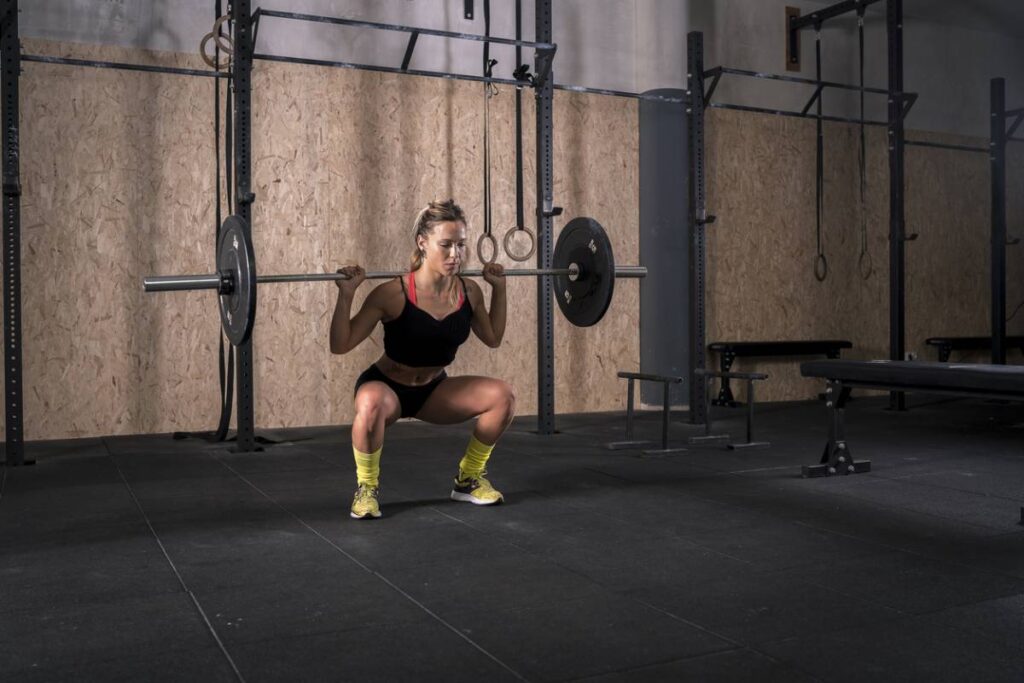
Training techniques to master your front squats
If you're new to weightlifting, practice traditional squats before attempting the front variation. Then, place the bar in the rack at chest height and spread your hands to grip it. Your hand position should be wider than your shoulders.
Bend your knees, point your elbows forward, and gently lift the bar off the rack. Step back, place your feet shoulder-width apart, and slightly angle them outwards.
Keep your heels firmly on the ground, then bend your knees again until your thighs are parallel to the floor. During the front squat, maintain your vertical posture and keep your chest open to return to the starting position. Repeat the exercise several times for quick results.
Tips for overcoming front squat difficulties
If your wrists or forearms are not flexible, you may find it difficult to position your hands correctly during front squat exercises. To address this, start by warming up this part of your body. Interlace your fingers and rotate them in both directions for a few minutes.
Another tip: cross your arms when gripping the bar and hold it against your shoulders. However, this technique is not recommended for lifting heavy weights. Keep this in mind and make adjustments as you progress in your practice.
Also, don't neglect the position of your elbows during the movements to avoid losing balance. Make sure they are pointing towards the ceiling. You can also vary how close or far apart your hands are when performing these exercises. The key is to find the ideal position to execute your front squats well.

Other movements that facilitate the front squat
For muscle strengthening, the front squat is an effective exercise. However, you can supplement it with variations to improve your performance.
Common exercises
Frequently practice front squats with elevated heels to improve your ankle mobility and calf flexibility. Place plates under your feet and descend further when performing the exercises. This allows you to achieve a better range of motion and optimize the strengthening of your quadriceps.
The goblet squat, meanwhile, is an ideal solution for those who are not yet comfortable with a barbell. Hold a kettlebell or dumbbell close to your chest to simulate holding a goblet. This exercise strengthens the legs and helps support weight in front of the body.
The offset front squat with a kettlebell is also recommended. This advanced form of the previous variation allows you to better tone your core. Shift the weight to one side to engage stabilizing muscles and improve your balance. You can also use resistance bands to add resistance during the ascending phase of this training exercise.
How and why to do overhead squats?
The overhead squat is another strength training variation you can try. It involves holding a loaded barbell above your head with extended arms. This exercise improves mobility and strengthens the shoulder and core muscles. It mobilizes the thoracic spine, ankles, and hips while being ideal for preparing you for the front squat.
Unlike the back squat, the overhead does not allow for lifting heavy weights. However, it requires good concentration and engages more muscle groups simultaneously.
In conclusion, the front squat offers an effective alternative to the back squat for muscle strengthening. It targets the quadriceps and ensures an upright posture. Employ the right techniques and choose appropriate variations to achieve excellent performance.